An Intern’s First Week at United Way

June 1, 2022

An Intern’s First Week at United Way

          When I began my first week as a Social Justice intern, I faced many unknowns. I knew the general goals of my eight weeks at United Way, I had met two of the four employees in my interview, and I knew a person I had never met before was picking me up in the morning. So, at exactly 7:50AM on Monday, with my lunchbox in hand, I left the residential hall, entered Kayley’s truck, and began my first week at United Way of Wayne and Holmes.


           As I walked into the office, dampened by a cold rain, I was immediately enveloped in warmth. Within the light blue walls, three women introduced themselves to me with a smile and I gradually felt more comfortable in the new space. After learning how to operate the coffee machine and where to keep my belongings, I was invited to a “welcome brunch.” Over omelets and coffee, I learned more about the organization and the four women who would serve as my supervisors and mentors for the next eight weeks. With a full stomach, I spent the rest of the day touring the office, cleaning eight hundred ducks from the previous day’s Duck Derby, and being part of my first Facebook live.


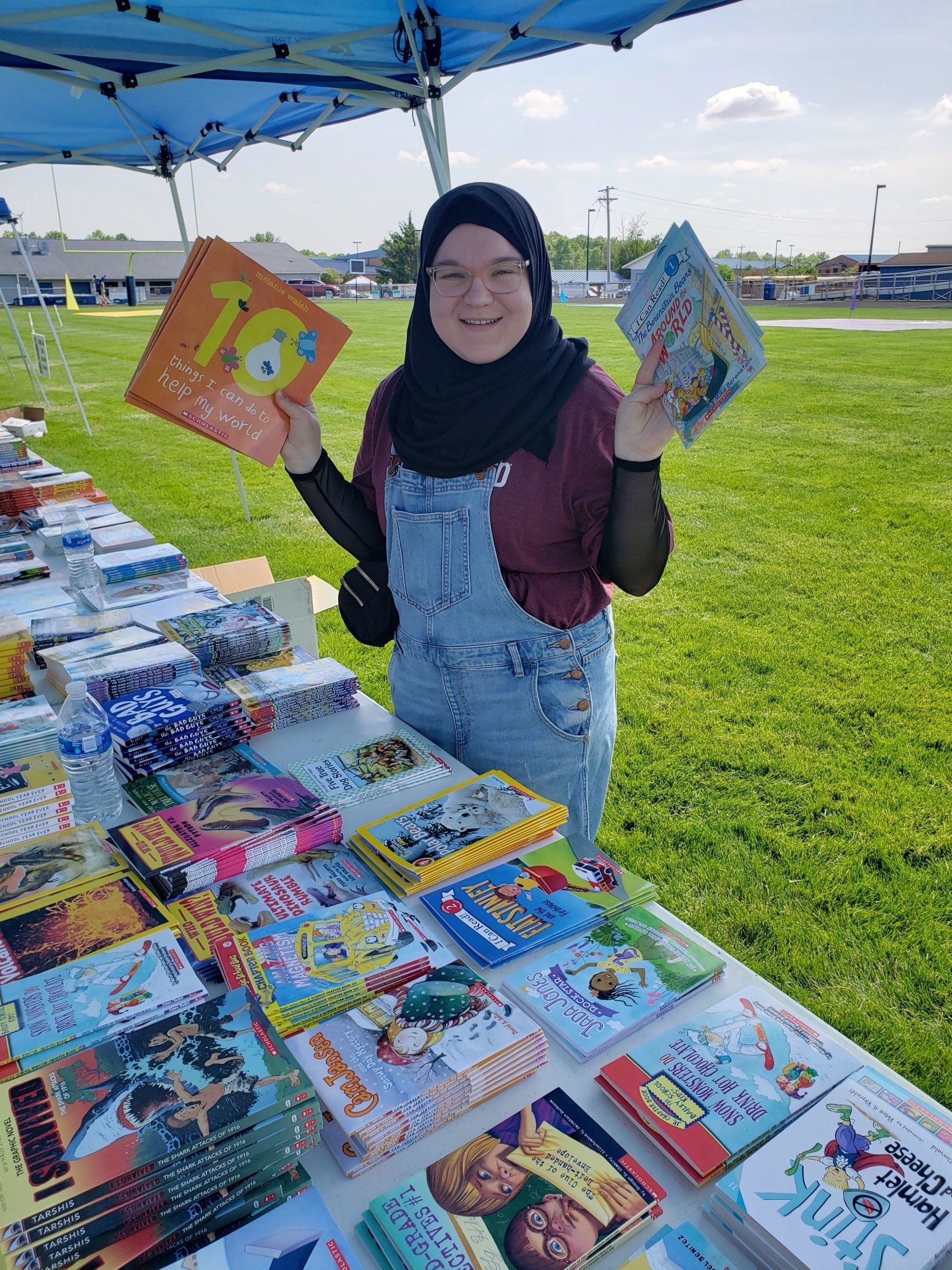
           My second and third day was an opportunity for me to feel the sunshine on my face, have dirt under my feet (or rather, turf), and meet the community United Way serves. Helping with the “Reading Under the Lights” events brought me face-to-face with people in the community that I would never meet otherwise. As a College of Wooster student, campus is a little “bubble,” with just an occasional visit downtown and uptown on the weekends. While floating around in my little bubble, I often miss the outside community, especially the K-12 students. Seeing their smiling faces while they choose their books and hearing their laughter as they meet a “Pete the Cat” mascot made the sweat on my brow and the soreness in my feet all worth it. I saw parents, who usually pass by in their cars on Beall Avenue on their way to work, sitting with their children to read as a family. The community who seems so far away sometimes was right there, asking me questions and saying hello, and I felt connected to them in a whole new way.


           My interactions with the community did not end with the “Reading Under the Lights” events. I was fortunate enough to attend an Extreme Weather Shelter meeting with my supervisor, located at the Salvation Army. In this meeting, I was able to see the background planning and logistics of running the shelter, such as how many cots can fit in the space or how to find storage solutions. A day later, I helped with United Way’s Annual Meeting, where I met almost one hundred of their partners and donors. As I sat over a nice meal, overlooking the long tables of people chattering, I realized that in my first week at United Way, I saw all of the essential components of a non-profit. Helping a community isn’t just sitting in an office, going to meetings, or even, being face-to-face with the community. Rather, it is the wonderful combination of all those things. Without sitting in front of a computer for hours, making dozens of calls, and writing email after email, organizations cannot operate. But, without making real-life connections with those in the community, one can often lose focus and the drive to do what is needed. The balance is necessary, and it is impossible to function without it.


            And that is what I learned in my first week as an intern at United Way.


- Alexa Carlozzi


By Katie Koglman May 5, 2026
One Flat Tire Away: The Reality for Working Families in Our Community By: Ashley Hershberger Around Holmes and Wayne Counties, people are doing what they’re supposed to do. They’re working. They’re showing up. They’re trying to get ahead. And still, far too many of our friends and neighbors are one flat tire, one home repair, or one unexpected bill away from falling behind . At United Way Wayne and Holmes Counties, we hear this story all the time… from families, employers, school staff, churches, and local businesses. The problem isn’t effort. It’s that when something goes wrong, there’s just not much wiggle room. Who Is ALICE? You might hear our team talk about ALICE . It sounds like data, but it’s really the people we know: coworkers, parents from ball practice, folks sitting next to us at church and our own family members. ALICE stands for Asset Limited, Income Constrained, Employed . In plain terms: people who are working, but still can’t quite afford the basics. That includes things like housing, food, transportation, childcare, and healthcare. Here’s what that looks like in our community: Holmes County 31% of households are ALICE 9% live in poverty Wayne County 26% of households are ALICE 11% live in poverty That means 40% of households in Holmes County and 37% in Wayne County are living at or below the basic cost of living . These families aren’t avoiding work. Many are working full‑time, sometimes multiple jobs, and still making tough choices: Fix the car or pay the electric bill Buy groceries or fill a prescription Pay for childcare or turn down a better job That’s not bad decision‑making. That’s a math problem. What Household Survival Budgets Tell Us United Way uses Household Survival Budgets to understand what it actually costs to live. Not get ahead, not save… just cover the basics. When you add it all up (rent/mortgage, utilities, food, childcare, gas, healthcare, and taxes) a lot of working families simply don’t earn enough to keep up. Wages haven’t kept pace with real life costs, especially in areas like ours where getting to work often means getting in a car that you yourself are responsible for. That’s why so many hardworking people fall into the ALICE category, even while doing everything “right.” (See example budgets below)
By Kayley Cox April 6, 2026
The Day Off That Opened My Eyes I took the day off to chaperone my son’s Kindergarten field trip: fun, sweet, and honestly pretty exhausting. After dropping him back at school, I ran to the grocery store. At the checkout, the cashier asked how my day was going. I laughed and told her I was a little tired from keeping up with a group of five-year-olds all day at the field trip. She smiled and said she understood. She had recently retired from a local school district, and then she shared something that made me pause. Despite having worked all those years, she couldn’t afford to stay retired. She was still too young for Medicare, and health insurance premiums were simply unaffordable without additional income. Even with Social Security survivor benefits from her late husband, she was struggling to get by. So, she returned to the workforce. And she’s not alone. Far too many older adults are finding themselves in similar positions: forced back into work not because they want to, but because our systems leave them with no choice. Rising healthcare costs, gaps before Medicare eligibility, and limited fixed incomes mean many retirees simply cannot cover their basic needs. This wasn’t just a conversation in a grocery store checkout line. It was a reminder that the people who spent decades serving our communities, teaching, caregiving, supporting essential services, often face their own unseen challenges. We can do better. We have to do better. If this story resonates with you, here are a few meaningful ways you can help create change: 1. Support organizations helping older adults access healthcare and financial stability. United Way Wayne and Holmes partners with dozens of local nonprofits to support seniors who have nowhere else to turn. 2. Advocate for policies that protect affordable healthcare, strengthen Social Security, and support aging with dignity. Your voice truly matters. 3. Check in on retirees in your life. A simple “How are you really doing?” can make all the difference. 4. Get involved. Volunteer, donate, or share this message. Every action counts! Our older adults deserve more than scraping by. They deserve dignity, stability, and the ability to enjoy the retirement they worked for. Let’s work together to make that a reality.  For information about how to donate to help our Older Adults in Wayne and Holmes, go to uwwh.org, email us at info@uwwh.org or call (330) 264-5576.
By Kayley Cox March 5, 2026
You Don’t Know, What You Don’t Know At United Way, one of the most meaningful parts of my job is helping community members discover the resources that already exist to support them. Holmes and Wayne Counties are filled with compassionate organizations and services ready to help, but too often, people simply don’t know where to start. That’s where WHIRE/211 comes in. And although 211 has been in our community for over 60 years, many people still have no idea it exists. If you’ve never heard of 211, you’re not alone. It’s one of the most powerful tools we have, and yet, I constantly hear these same reactions when I mention it: “Wow, I had no idea.” “This was so informative.” “I wish I knew this sooner.” 📞 What Is 211? 211 is our local, 24/7 resource hotline. With just one call to 211 or the direct line (330) 263-6363, you’re connected to a live, compassionate operator who can guide you to essential services in our area. Whether you’re looking for: 🥫 Food assistance 🏠 Housing support 💼 Workforce development 🧠 Mental health services 🚗 Transportation help 👶 Childcare options …or any other community resource, 211 is your starting point. And the best part? It’s anonymous and available 24 hours, 7 days a week, 365 (or 366 if leap year) days a year. 💬 Why Awareness Matters I’ve spoken at schools, met with nonprofits, and presented to local businesses. And every time, I’m reminded of how powerful awareness can be. People are genuinely surprised to learn how much help is just one phone call away. So many resources that our own community members don’t know exist. That’s why spreading the word about 211 is so important. Whether you’re a community leader, a neighbor, or someone simply looking for help, knowing about 211 can make all the difference.  📣 Help Us Share the Message If you’ve used 211, tell someone about it. If you haven’t, save the number. And if you’re part of a group, organization, or business that serves our community, consider inviting United Way to share more about how 211 is a free resource right in our community. To schedule a brief presentation or meeting about WHIRE/211, contact me at kayley@uwwh.org Because you don’t know what you don’t know, but now that you do, share it. The more we know, the more we can help, and the stronger our community becomes.
Show More